Namunaviy savollar

Ingliz tili test savollari — javobi bilan

UZBMB namunalaridan 40 ta savol. Avval oʻzingiz yeching, keyin “Javobni koʻrish” ni bosing.

Ot

1-savol

From the marked areas 1, 2, 3 and 4, identify the one that is wrong. The old man (1)‾\underline{\text{old man (1)}} is expecting (2)‾\underline{\text{expecting (2)}} with pleasure the visit of (3)‾\underline{\text{of (3)}} his grandchildrens (4)‾\underline{\text{grandchildrens (4)}}.

  1. 2
  2. 1
  3. 3
  4. 4
Javobni koʻrish

Toʻgʻri javob: D) 4

Izoh:

Yechilishi. To solve this test, you should have a wide range of knowledge on sentence order, subject and verb agreement, singular and plural forms, etc. Here are given four underlined marked areas, phrases or gaps in this test. You should identify and choose from the marked areas 1, 2, 3 and 4, which one is incorrect.

old man (1), expecting (2), of (3), grandchildrens (4)

There is a rule on plural form of the word “child”, when it is plural it changes to “children”. So the marked area “grandchildrens” is incorrect. It should be changed to “grandchildren” without adding “–s” at the end.

Manba: UZBMB namunaviy test topshiriqlari va ularni yechish bo‘yicha tavsiyalar (2020). M. G‘apporov, R. Qosimova “Ingliz tili grammatikasi”, page-112.

2-savol

Choose the correct answer. Parents should teach their children to save drinkable ... .

  1. a water
  2. the water
  3. water
  4. waters’
Javobni koʻrish

Toʻgʻri javob: C) water

Izoh:

“Water” is an uncountable noun: it takes no “a” and no plural. It is used in a general sense here (drinkable water in general), so no “the” either: “to save drinkable water”.

Manba: UZBMB namunaviy test topshiriqlari (2022, mutaxassislik). Javob kaliti UZBMB tomonidan e’lon qilinmagan; kalit Zehniy tomonidan yechib chiqilgan.

3-savol

Choose the correct answer. The Browns have got three ..., two ... and one ... .

  1. children/boys/girls
  2. childs/boys/girl
  3. children/boys/girl
  4. child/boy/girls
Javobni koʻrish

Toʻgʻri javob: C) children/boys/girl

Izoh:

Yechilishi. The plural form of a word is the form that is used when referring to more than one person or thing. The numerals “three” and “two” in the given sentence indicate to using a plural form of a noun. This means we can use only plural form of the noun “child” - “children” and plural form of the word “boy” - “boys”. The singular form of a word is the form that is used when referring to one person or thing. The last word “one” in the given sentence indicates to using a singular form of a noun.

Manba: UZBMB namunaviy test topshiriqlari va ularni yechish bo‘yicha tavsiyalar (2020). Svetlana Xan, Ludmila Kamalova “Teens’ English 7-sinf uchun darslik”, page -112; M. G‘apporov, R. Qosimova “Ingliz tili grammatikasi”, pages 110-115.

4-savol

Choose the correct answer. They made ... mistakes in their test in French.

  1. such many
  2. so much
  3. very much
  4. so many
Javobni koʻrish

Toʻgʻri javob: D) so many

Izoh:

“Mistakes” is a countable plural noun, so it takes “many”, not “much”. To intensify “many” before a plural noun we use “so”: “so many mistakes”. “Such” is used with a noun phrase without “many” (“such a lot of mistakes”), so “such many” is wrong.

Manba: UZBMB namunaviy test topshiriqlari (2022, mutaxassislik). Javob kaliti UZBMB tomonidan e’lon qilinmagan; kalit Zehniy tomonidan yechib chiqilgan.

Olmosh (kishilik, egalik, o‘zlik, birgalik, ko‘rsatish, so‘roq, nisbiy, gumon olmoshlar)

5-savol

Choose the correct answer. My niece and ... friend are waiting for you outside. Please be quick.

  1. his
  2. hers
  3. her
  4. mine
Javobni koʻrish

Toʻgʻri javob: C) her

Izoh:

Before a noun we need a possessive determiner, not a possessive pronoun (“hers”, “mine” stand alone). “Niece” is female, so “her friend” — the friend of my niece.

Manba: UZBMB namunaviy test topshiriqlari (2022, mutaxassislik). Javob kaliti UZBMB tomonidan e’lon qilinmagan; kalit Zehniy tomonidan yechib chiqilgan.

Sifat (sifat darajalari: oddiy, qiyosiy va orttirma)

6-savol

Choose the correct answer. The weather isn’t as ... today as it was 3 days ago.

  1. warmer
  2. warm
  3. warmest
  4. as warm
Javobni koʻrish

Toʻgʻri javob: B) warm

Izoh:

Yechilishi. To solve this test, one should know the rule of the adjectives, the Degrees of Comparison. The answer A indicates to comparative form, as there is not any keyword for the comparative we don’t need it. The answer C indicates to the superlative degree of the adjective, but it also has a mistake as there is no definite article “the” before superlative degree. The answer D has another unnecessary “as”. We can only choose the answer B. As the answer B indicates to the positive degree of the adjective, that’s what we need. According to the rule, the positive degree of the adjective is used in the structure “as … as”.

Manba: UZBMB namunaviy test topshiriqlari va ularni yechish bo‘yicha tavsiyalar (2020). M. G‘apporov, R. Qosimova “Ingliz tili grammatikasi”, pages 147-148; Svetlana Xan, Ludmila Kamalova “Teens’ English 7-sinf uchun darslik”, pages 114-115.

7-savol

Choose the correct answer. The ... you work, the ... your results become.

  1. less/better
  2. much/better
  3. least/worst
  4. more/better
Javobni koʻrish

Toʻgʻri javob: D) more/better

Izoh:

The double comparative “the + comparative …, the + comparative …” shows that two things change together: “The more you work, the better your results become.” “much” and “least/worst” are not comparatives in this pattern, and “less … better” is illogical.

Manba: UZBMB namunaviy test topshiriqlari (2022, mutaxassislik). Javob kaliti UZBMB tomonidan e’lon qilinmagan; kalit Zehniy tomonidan yechib chiqilgan.

Fe’l zamonlari (hozirgi, o‘tgan va kelasi zamon Simple, Continuous, Perfect, Perfect Continuous guruhlarida)

8-savol

Choose the correct answer. I ... my first exhibition when I was nineteen.

  1. were organizing
  2. organized
  3. have organized
  4. were organized
Javobni koʻrish

Toʻgʻri javob: B) organized

Izoh:

“When I was nineteen” is a finished time in the past, so the Past Simple is needed: “I organized”. “Have organized” (Present Perfect) cannot go with a finished past time, “were” does not agree with “I”, and “were organized” is passive.

Manba: UZBMB namunaviy test topshiriqlari (2022, mutaxassislik). Javob kaliti UZBMB tomonidan e’lon qilinmagan; kalit Zehniy tomonidan yechib chiqilgan.

9-savol

Choose the correct answer. At this time tomorrow, I ... my essay in class.

  1. will be writing
  2. write
  3. will write
  4. will have been written
Javobni koʻrish

Toʻgʻri javob: A) will be writing

Izoh:

Yechilishi. Translation of the sentence helps you identify the answer. Also you should know rules about tenses. There is a keyword “at this time tomorrow”. This keyword belongs to the Future Continuous Tense. The verb “write” in the answer B is in the Present Simple. The verb “will write” in the answer C is in the Future Simple Tense. The verb “will have been written” in the answer D is the Future Perfect Tense in Passive Voice form. So here we use the answer A “will be writing”. This is the Future Continuous Tense. This tense shows that the action will be happening at exact time tomorrow. The formation of the tense is as the following: Subject + shall (will) + be + Ving.

Manba: UZBMB namunaviy test topshiriqlari va ularni yechish bo‘yicha tavsiyalar (2020). M. G‘apporov, R. Qosimova “Ingliz tili grammatikasi”, pages 88-89.

10-savol

Choose the correct answer. We ... all the units since we were told about the final exam.

  1. have been revising
  2. were revising
  3. revise
  4. has been revising
Javobni koʻrish

Toʻgʻri javob: A) have been revising

Izoh:

“Since + a point in the past” shows an action that started then and is still going on, so the Present Perfect Continuous is used: “We have been revising”. With “we” the auxiliary is “have”, not “has”.

Manba: UZBMB namunaviy test topshiriqlari (2022, mutaxassislik). Javob kaliti UZBMB tomonidan e’lon qilinmagan; kalit Zehniy tomonidan yechib chiqilgan.

Modal fe’llar va ularning ekvivalentlari (Can, Could, May, Might, Must, Ought to, Should, Need, Have to)

11-savol

Choose the correct answer. Take an umbrella. It ... rain later.

  1. shouldn’t
  2. might
  3. has to
  4. can’t
Javobni koʻrish

Toʻgʻri javob: B) might

Izoh:

Yechilishi. To solve this test, we should use “may” or “might”. As “may/might + present infinitive” can express possibility in the present or future. For example: He may/might tell his wife. (Perhaps he will tell his wife.)

“May or might” is used for present or future possibility. Normally either can be used, “might” slightly increases the doubt. Note that in speech we can also indicate increased doubt by stressing “may / might”. “Tom may lend you the money” (with a strong stress on may) implies that this is not very likely. “Tom might lend you the money” (with a strong stress on might) implies “I don’t think this is at all likely. I think it is unlikely”.

Manba: UZBMB namunaviy test topshiriqlari va ularni yechish bo‘yicha tavsiyalar (2020). M. G‘apporov, R. Qosimova “Ingliz tili grammatikasi”, pages 18; 26-27; Lutfullo Jo‘rayev, Svetlana Khan, etc. “Fly High English 8-sinf uchun darslik”, page -102.

12-savol

Choose the correct answer. He was fined for speeding. He ... driven so fast.

  1. should not have
  2. should have
  3. ought not to
  4. must not
Javobni koʻrish

Toʻgʻri javob: A) should not have

Izoh:

To criticise a past action that did happen we use “should not have + past participle”: “He should not have driven so fast.” “should have driven” says the opposite, and “ought not to driven” / “must not driven” are ungrammatical (no “have”).

Manba: UZBMB namunaviy test topshiriqlari (2022, mutaxassislik). Javob kaliti UZBMB tomonidan e’lon qilinmagan; kalit Zehniy tomonidan yechib chiqilgan.

13-savol

Choose the correct answer. You have to tidy up the house, ... you?

  1. hadn’t
  2. don’t
  3. haven’t
  4. didn’t
Javobni koʻrish

Toʻgʻri javob: B) don’t

Izoh:

Yechilishi. This is a short addition to the sentence, asking for agreement or confirmation. After negative statements we use the ordinary interrogative: You didn’t see him, did you? After affirmative statements we use the negative interrogative: Peter helped you, didn’t he? Negative verbs in the tags are usually contracted. There is an irregular formation: I’m late, aren’t I? Note that “let’s” has the tag “shall”: Let’s go, shall we? The subject of the tag is always a pronoun. The “have to” has its negative, “don’t / doesn’t have to” are the correct forms for habitual actions.

Manba: UZBMB namunaviy test topshiriqlari va ularni yechish bo‘yicha tavsiyalar (2020). M. G‘apporov, R. Qosimova “Ingliz tili grammatikasi”, pages 287-288.

Predloglar (oddiy predloglari, iboralar va birikmalar tarkibiga kiradigan predloglar)

14-savol

Choose the correct answer. I am accustomed to ... care of myself.

  1. have taken
  2. taken
  3. taking
  4. to take
Javobni koʻrish

Toʻgʻri javob: C) taking

Izoh:

Yechilishi. To solve this test, one should know the meaning of the phrase “to be accustomed to…”. “To be accustomed to” means “to be in the habit of doing something”. One also should know “to” is considered here as a preposition. You know that after preposition you can use Ving form. Adjective (participle) + preposition + gerund.

For example: She is accustomed to driving fast.

Manba: UZBMB namunaviy test topshiriqlari va ularni yechish bo‘yicha tavsiyalar (2020). M. G‘apporov, R. Qosimova “Ingliz tili grammatikasi”, page-51.

15-savol

Choose the correct answer. They had to wait ... the tree until the rain stopped.

  1. under
  2. out
  3. between
  4. above
Javobni koʻrish

Toʻgʻri javob: A) under

Izoh:

People shelter from rain beneath a tree: “wait under the tree”. “between” needs two objects, “above” and “out” make no sense here.

Manba: UZBMB namunaviy test topshiriqlari (2022, mutaxassislik). Javob kaliti UZBMB tomonidan e’lon qilinmagan; kalit Zehniy tomonidan yechib chiqilgan.

16-savol

Choose the correct answer. He suffers rather badly ... migraines.

  1. as
  2. from
  3. for
  4. of
Javobni koʻrish

Toʻgʻri javob: B) from

Izoh:

Yechilishi. To solve this test, one should give attention to its translation. The word “suffer” means “to be affected by or subject to”. For example: She suffers from neglect. In addition, after the verb “suffer” we use the preposition “from”.

Manba: UZBMB namunaviy test topshiriqlari va ularni yechish bo‘yicha tavsiyalar (2020). M. G‘apporov, R. Qosimova “Ingliz tili grammatikasi”, pages 136; 218.

17-savol

From the marked areas, identify the one that is wrong. Ecopark is (1)‾\underline{\text{is (1)}} a place for people who (2)‾\underline{\text{who (2)}} want to spend (3)‾\underline{\text{to spend (3)}} quality time on (4)‾\underline{\text{on (4)}} the open air with friends and families.

  1. 4
  2. 1
  3. 2
  4. 3
Javobni koʻrish

Toʻgʻri javob: A) 4

Izoh:

The fixed phrase is “in the open air”, not “on the open air”, so marked area 4 is wrong. “is”, “who” (for people) and “want to spend” are all correct.

Manba: UZBMB namunaviy test topshiriqlari (2022, mutaxassislik). Javob kaliti UZBMB tomonidan e’lon qilinmagan; kalit Zehniy tomonidan yechib chiqilgan.

Ko‘chirma va o‘zlashtirma gaplar

18-savol

Choose the correct answer. Nodira says, “My friend has moved to another region”. Nodira says that ... to another region.

  1. my friend has moved
  2. her friend had moved
  3. her friend has moved
  4. your friend moved
Javobni koʻrish

Toʻgʻri javob: C) her friend has moved

Izoh:

The reporting verb “says” is in the present, so the tense does not move back: “has moved” stays. Only the pronoun changes: “my” (Nodira’s) becomes “her”. So: “Nodira says that her friend has moved to another region.”

Manba: UZBMB namunaviy test topshiriqlari (2022, mutaxassislik). Javob kaliti UZBMB tomonidan e’lon qilinmagan; kalit Zehniy tomonidan yechib chiqilgan.

19-savol

Choose the correct answer. The boys said, "Hurrah! We have won the match". The boys exclaimed with joy ... the match.

  1. that they won
  2. if had they won
  3. that they had won
  4. if they have won
Javobni koʻrish

Toʻgʻri javob: C) that they had won

Izoh:

Yechilishi. When we turn Direct Speech into Indirect, some changes are usually necessary. Indirect Speech is usually introduced by a verb in the Past Tense. Verbs in the Direct Speech have then to be changed into a corresponding past tense.

Present Perfect → Past Perfect: “I have found a flat”, he said. → He said that he had found a flat.

Exclamations beginning with “What ... or How ...” can be reported by “exclaim / say that”. He said, “What a dreadful idea!” = He exclaimed that it was a dreadful idea.

Pronouns and possessive adjectives usually change from first or second to third person except when the speaker is reporting his own words:

I said, “I like my new house.” = I said that I liked my new house.

Manba: UZBMB namunaviy test topshiriqlari va ularni yechish bo‘yicha tavsiyalar (2020). Lutfullo Jo‘rayev, Svetlana Khan etc., “Fly High English 8-sinf uchun darslik”, page -25; M. G‘apporov, R. Qosimova “Ingliz tili grammatikasi”, pages 299-307.

O‘rganilgan mavzular bilan bog‘liq leksik birliklar

20-savol

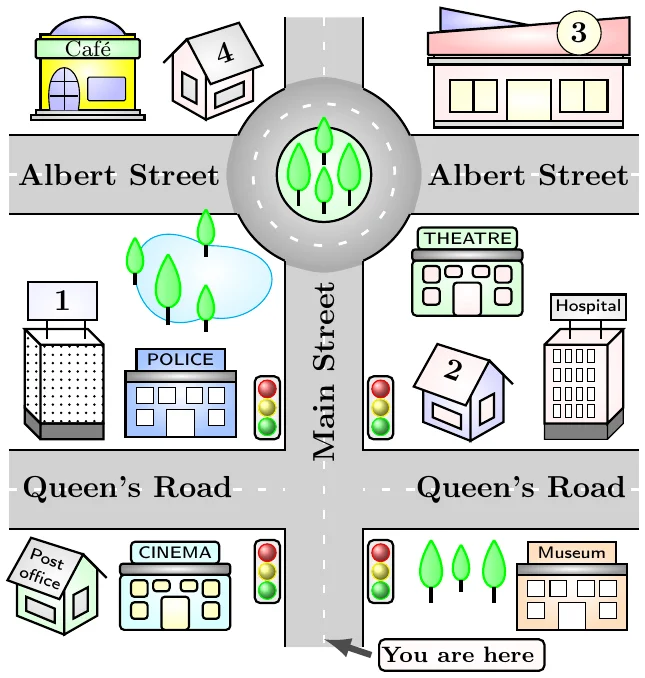
Choose the correct destination. − Can you tell me the way to the book shop? − Go straight on. At the roundabout turn left. You will see it on the right.

Shahar xaritasi: «You are here» belgisidan Main Street bo‘ylab shimolga yo‘l aylanma (roundabout)ga boradi. Aylanmadan chapda (g‘arbda) va o‘ngda Albert Street. Albert Streetning g‘arbiy qismida, shimol tomonda Café va 4-bino; sharqiy qismida 3-bino. Main Street va Queen’s Road oralig‘ida: g‘arbda 1-bino, Police; sharqda Theatre, 2-bino, Hospital. Queen’s Roaddan janubda: Post office, Cinema, Museum
  1. 1
  2. 2
  3. 3
  4. 4
Javobni koʻrish

Toʻgʻri javob: D) 4

Izoh:

From “You are here” you go straight up Main Street to the roundabout. Turning left there puts you on Albert Street heading west. When you walk west, your right-hand side is the north side of the street, where building 4 stands (next to the café). So the book shop is 4.

Manba: UZBMB namunaviy test topshiriqlari (2022, mutaxassislik). Javob kaliti UZBMB tomonidan e’lon qilinmagan; kalit Zehniy tomonidan yechib chiqilgan.

21-savol

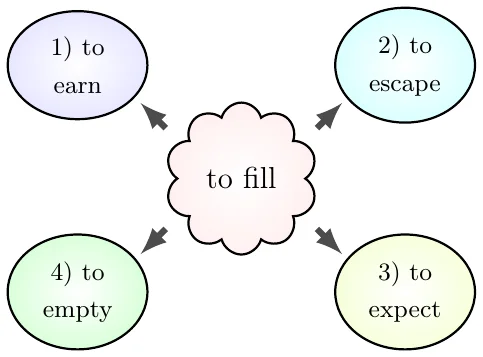
Choose the antonym of the verb to fill (a glass). 1) to earn 2) to escape 3) to expect 4) to empty

«to fill» so‘zidan to‘rt tomonga strelkalar: 1) to earn, 2) to escape, 3) to expect, 4) to empty
  1. 4
  2. 2
  3. 1
  4. 3
Javobni koʻrish

Toʻgʻri javob: A) 4

Izoh:

To fill a glass is to make it full; the opposite is to empty it (make it empty). “earn”, “escape” and “expect” are not related in meaning. So the answer is 4.

Manba: UZBMB namunaviy test topshiriqlari (2022, mutaxassislik). Javob kaliti UZBMB tomonidan e’lon qilinmagan; kalit Zehniy tomonidan yechib chiqilgan.

22-savol

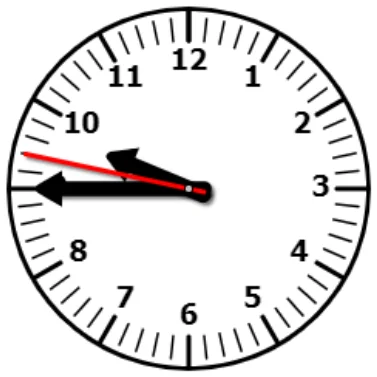
Choose the correct answer according to the picture. I mustn’t forget to phone the doctor at … tomorrow.

Soat: katta (minut) mili 9 ni, kichik (soat) mili 10 ga yaqin joyni ko‘rsatmoqda
  1. a quarter to ten
  2. a quarter past ten
  3. half past ten
  4. ten past fifteen
Javobni koʻrish

Toʻgʻri javob: A) a quarter to ten

Izoh:

Yechilishi. To solve this test, one is supposed to know the arrangement of numerals and time parts. The minute hand shows nine, the hour hand shows ten. As it is shown in the picture, the exact time is fifteen minutes to ten. As you know, fifteen can be equal to “a quarter”. Here we can replace “fifteen” to “a quarter” and the structure changes to “a quarter to ten”.

Manba: UZBMB namunaviy test topshiriqlari va ularni yechish bo‘yicha tavsiyalar (2020). Svetlana Xan, Ludmila Kamalova “Teens’ English 7-sinf uchun darslik”, page -148; M. G‘apporov, R. Qosimova “Ingliz tili grammatikasi”, page-156.

23-savol

Find the definition of the given word. “To achieve”

  1. To succeed in doing something
  2. To discover something accidentally
  3. To make somebody take part in something
  4. To think carefully about something
Javobni koʻrish

Toʻgʻri javob: A) To succeed in doing something

Izoh:

“To achieve” means to succeed in doing or getting something, usually through effort. B describes “to come across”, C “to involve”, D “to consider”.

Manba: UZBMB namunaviy test topshiriqlari (2022, mutaxassislik). Javob kaliti UZBMB tomonidan e’lon qilinmagan; kalit Zehniy tomonidan yechib chiqilgan.

24-savol

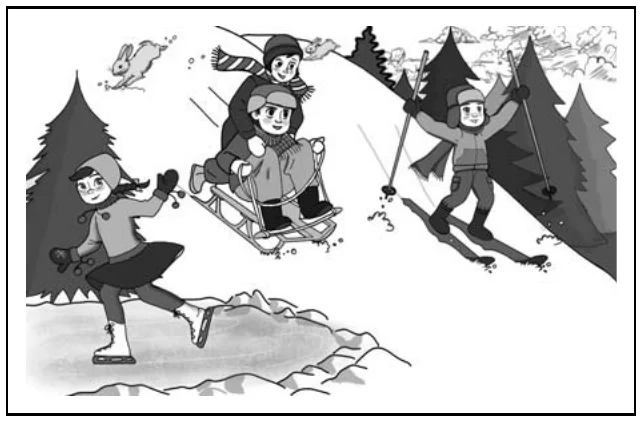
Choose the correct answer. In this picture, two children are ... down the hill.

Qishki manzara: bir qiz muz ustida konkida uchmoqda, ikki bola bitta chanada tepalikdan pastga tushmoqda, bir bola chang‘ida turibdi
  1. skating
  2. sledging
  3. skiing
  4. snowboarding
Javobni koʻrish

Toʻgʻri javob: B) sledging

Izoh:

In the picture two children sit together on one sledge and slide down the hill, so they are sledging. Only one girl is skating and only one boy is skiing; nobody is snowboarding.

Manba: UZBMB namunaviy test topshiriqlari (2022, mutaxassislik). Javob kaliti UZBMB tomonidan e’lon qilinmagan; kalit Zehniy tomonidan yechib chiqilgan.

25-savol

Which of these qualities is POSITIVE?

  1. Reliable
  2. Overweight
  3. Stupid
  4. Aggressive
Javobni koʻrish

Toʻgʻri javob: A) Reliable

Izoh:

“Reliable” means someone you can trust and depend on — a positive quality. “Overweight”, “stupid” and “aggressive” are negative.

Manba: UZBMB namunaviy test topshiriqlari (2022, mutaxassislik). Javob kaliti UZBMB tomonidan e’lon qilinmagan; kalit Zehniy tomonidan yechib chiqilgan.

Gazeta va jurnallardan olingan xabarlar, e’lonlar, sodda ilmiy va ilmiy-ommabop matnlar

26-savol

Read the text and answer the questions according to it. Winter is cold in some places. Many plants do not grow during winter. Some plants die. Snow and ice may cover the ground. It can be hard for animals to find food during winter. Animals get through this time in many ways. Birds can fly. Many of them do not stick around for the winter. They leave. They go to a place with nice weather. Then they come back home in the spring. We call this migration. Migrating is a good way to avoid the cold. Another good way to avoid the cold is to sleep during the winter. Many animals hide during the winter. Their bodies slow down. They save their energy. They do not eat. They live off their fat. They do this until food returns. We call this hibernation. According to the passage, all of the statements are TRUE, EXCEPT ... .

  1. Lots of plants stop growing in winter.
  2. Animals have difficulties in finding food.
  3. Many birds stay for the winter.
  4. Some animals pass winter sleeping.
Javobni koʻrish

Toʻgʻri javob: C) Many birds stay for the winter.

Izoh:

The passage says birds “do not stick around for the winter. They leave.” So “Many birds stay for the winter” is false. A (“Many plants do not grow during winter”), B (“It can be hard for animals to find food”) and D (hibernation) are stated in the text.

Manba: UZBMB namunaviy test topshiriqlari (2022, mutaxassislik). Javob kaliti UZBMB tomonidan e’lon qilinmagan; kalit Zehniy tomonidan yechib chiqilgan.

27-savol

Read the text and answer the questions according to it. Eddie was a carpet fitter, and he hated it. For ten years he had spent his days sitting, kneeling or crawling on floors, in houses, offices, shops, factories and restaurants. Ten years of his life, cutting and fitting carpets for other people to walk on, without even seeing them. When his work was done, no one ever appreciated it. No one ever said “Oh, that’s a beautiful job, the carpet fits so neatly”. They just walked all over it. Eddie was sick of it. He was especially sick of it on this hot, humid day in August, as he was just cutting and fixing the last edge on a huge red carpet which he had fitted in the living room of Mrs. Vanbrugh’s house. Mrs. Vanbrugh, who changed her carpets every year, and always bought the best. Mrs. Vanbrugh, who had never even given him a cup of tea all day, and who made him go outside when he wanted to smoke. As used in the passage, “edge” means ... .

  1. location
  2. distance
  3. territory
  4. border
Javobni koʻrish

Toʻgʻri javob: D) border

Izoh:

“Cutting and fixing the last edge on a huge red carpet” — the edge of a carpet is its outer side, its border.

Manba: UZBMB namunaviy test topshiriqlari (2022, mutaxassislik). Javob kaliti UZBMB tomonidan e’lon qilinmagan; kalit Zehniy tomonidan yechib chiqilgan.

28-savol

Choose the logical end of this notice? NOTICE Check that all parts of the book are returned so that others...

E’lon: «NOTICE. Check that all parts of the book are returned so that others...»
  1. won’t enjoy them
  2. won’t read them
  3. can use them
  4. can throw them away
Javobni koʻrish

Toʻgʻri javob: C) can use them

Izoh:

The notice asks readers to return every part of a library book so that other people can use them too. The negative endings (A, B) contradict the purpose, and D is illogical.

Manba: UZBMB namunaviy test topshiriqlari (2022, mutaxassislik). Javob kaliti UZBMB tomonidan e’lon qilinmagan; kalit Zehniy tomonidan yechib chiqilgan.

29-savol

Read the instructions and answer the questions according to them. Thank you for choosing our product. Please read these instructions before use. − Aim the thermometer at your forehead. − Keep it vertical, about 3-5 cm away. − Press the measurement button, a “beep” sound will be heard after about one second. Then the measurement is completed with measured degree displayed. MAINTENANCE − Wipe the surface with a clean soft cloth with a little medical alcohol or water. − Keep the thermometer in places free from moisture or liquid. − Do not leave it under overheat or low temperature environment for a long time. − The thermometer should not be used in the sun or water. − Keep the thermometer out of the reach of children. NOTICE − After every use, wipe the sensor properly. − Please use the thermometer in a stable temperature environment. − When the thermometer comes from a place with a large temperature difference, please wait for ten minutes before using. It is recommended to store the thermometer in ... .

  1. dry places
  2. damp places
  3. moist places
  4. humid places
Javobni koʻrish

Toʻgʻri javob: A) dry places

Izoh:

“Keep the thermometer in places free from moisture or liquid” — that is, in dry places. “Damp”, “moist” and “humid” all mean wet.

Manba: UZBMB namunaviy test topshiriqlari (2022, mutaxassislik). Javob kaliti UZBMB tomonidan e’lon qilinmagan; kalit Zehniy tomonidan yechib chiqilgan.
30-savol

Read the text and answer the questions according to it. Winter is cold in some places. Many plants do not grow during winter. Some plants die. Snow and ice may cover the ground. It can be hard for animals to find food during winter. Animals get through this time in many ways. Birds can fly. Many of them do not stick around for the winter. They leave. They go to a place with nice weather. Then they come back home in the spring. We call this migration. Migrating is a good way to avoid the cold. Another good way to avoid the cold is to sleep during the winter. Many animals hide during the winter. Their bodies slow down. They save their energy. They do not eat. They live off their fat. They do this until food returns. We call this hibernation. According to the passage, hibernation is ... .

  1. a process of hunting for food
  2. animals’ winter sleeping
  3. an animal migration to warm countries
  4. an active state of animals
Javobni koʻrish

Toʻgʻri javob: B) animals’ winter sleeping

Izoh:

“Another good way to avoid the cold is to sleep during the winter … We call this hibernation.” So hibernation is animals’ winter sleep. C describes migration; A and D contradict the text (they do not eat, their bodies slow down).

Manba: UZBMB namunaviy test topshiriqlari (2022, mutaxassislik). Javob kaliti UZBMB tomonidan e’lon qilinmagan; kalit Zehniy tomonidan yechib chiqilgan.
31-savol

Read the instructions and answer the questions according to them. Thank you for choosing our product. Please read these instructions before use. − Aim the thermometer at your forehead. − Keep it vertical, about 3-5 cm away. − Press the measurement button, a “beep” sound will be heard after about one second. Then the measurement is completed with measured degree displayed. MAINTENANCE − Wipe the surface with a clean soft cloth with a little medical alcohol or water. − Keep the thermometer in places free from moisture or liquid. − Do not leave it under overheat or low temperature environment for a long time. − The thermometer should not be used in the sun or water. − Keep the thermometer out of the reach of children. NOTICE − After every use, wipe the sensor properly. − Please use the thermometer in a stable temperature environment. − When the thermometer comes from a place with a large temperature difference, please wait for ten minutes before using. Why do we need to wait for ten minutes before using the thermometer?

  1. to let our body temperature change
  2. to let it be used in new environment at once
  3. to let it adapt to new temperature
  4. to let it clean itself before using
Javobni koʻrish

Toʻgʻri javob: C) to let it adapt to new temperature

Izoh:

The waiting rule applies “when the thermometer comes from a place with a large temperature difference”, and it must be used “in a stable temperature environment”. Waiting lets the device adapt to the new temperature so that it measures correctly.

Manba: UZBMB namunaviy test topshiriqlari (2022, mutaxassislik). Javob kaliti UZBMB tomonidan e’lon qilinmagan; kalit Zehniy tomonidan yechib chiqilgan.
32-savol

Read the instructions and answer the questions according to them. Thank you for choosing our product. Please read these instructions before use. − Aim the thermometer at your forehead. − Keep it vertical, about 3-5 cm away. − Press the measurement button, a “beep” sound will be heard after about one second. Then the measurement is completed with measured degree displayed. MAINTENANCE − Wipe the surface with a clean soft cloth with a little medical alcohol or water. − Keep the thermometer in places free from moisture or liquid. − Do not leave it under overheat or low temperature environment for a long time. − The thermometer should not be used in the sun or water. − Keep the thermometer out of the reach of children. NOTICE − After every use, wipe the sensor properly. − Please use the thermometer in a stable temperature environment. − When the thermometer comes from a place with a large temperature difference, please wait for ten minutes before using. The body temperature is measured by ... .

  1. keeping the thermometer above the forehead
  2. keeping the thermometer 8 cm away from the forehead
  3. directing the thermometer at the forehead
  4. removing the thermometer from the forehead
Javobni koʻrish

Toʻgʻri javob: C) directing the thermometer at the forehead

Izoh:

The first instruction is “Aim the thermometer at your forehead”, i.e. direct it at the forehead. The distance is 3-5 cm, not 8 cm, and it is held in front of, not above, the forehead.

Manba: UZBMB namunaviy test topshiriqlari (2022, mutaxassislik). Javob kaliti UZBMB tomonidan e’lon qilinmagan; kalit Zehniy tomonidan yechib chiqilgan.

33-savol

Read the text and answer the questions according to it. Eddie was a carpet fitter, and he hated it. For ten years he had spent his days sitting, kneeling or crawling on floors, in houses, offices, shops, factories and restaurants. Ten years of his life, cutting and fitting carpets for other people to walk on, without even seeing them. When his work was done, no one ever appreciated it. No one ever said “Oh, that’s a beautiful job, the carpet fits so neatly”. They just walked all over it. Eddie was sick of it. He was especially sick of it on this hot, humid day in August, as he was just cutting and fixing the last edge on a huge red carpet which he had fitted in the living room of Mrs. Vanbrugh’s house. Mrs. Vanbrugh, who changed her carpets every year, and always bought the best. Mrs. Vanbrugh, who had never even given him a cup of tea all day, and who made him go outside when he wanted to smoke. Which statement would the author most likely DISAGREE with?

  1. Eddie took a delight in doing his job.
  2. Eddie’s job wasn’t appreciated by clients.
  3. Eddie was unable to put up with his job any longer.
  4. People never showed respect for his job.
Javobni koʻrish

Toʻgʻri javob: A) Eddie took a delight in doing his job.

Izoh:

The very first sentence says Eddie “hated it” and “was sick of it”, so the author would disagree that he took delight in his job. B and D match “no one ever appreciated it”, and C matches “Eddie was sick of it”.

Manba: UZBMB namunaviy test topshiriqlari (2022, mutaxassislik). Javob kaliti UZBMB tomonidan e’lon qilinmagan; kalit Zehniy tomonidan yechib chiqilgan.

34-savol

Read the text and answer the questions according to it. Eddie was a carpet fitter, and he hated it. For ten years he had spent his days sitting, kneeling or crawling on floors, in houses, offices, shops, factories and restaurants. Ten years of his life, cutting and fitting carpets for other people to walk on, without even seeing them. When his work was done, no one ever appreciated it. No one ever said “Oh, that’s a beautiful job, the carpet fits so neatly”. They just walked all over it. Eddie was sick of it. He was especially sick of it on this hot, humid day in August, as he was just cutting and fixing the last edge on a huge red carpet which he had fitted in the living room of Mrs. Vanbrugh’s house. Mrs. Vanbrugh, who changed her carpets every year, and always bought the best. Mrs. Vanbrugh, who had never even given him a cup of tea all day, and who made him go outside when he wanted to smoke. It can be inferred from the text that ... .

  1. Eddie was not paid the money he required
  2. Mrs. Vanbrugh was well-off and could often afford costly things
  3. Mrs. Vanbrugh enjoyed drinking tea with Eddie in her house
  4. Eddie’s health was worsening because of his smoking habit
Javobni koʻrish

Toʻgʻri javob: B) Mrs. Vanbrugh was well-off and could often afford costly things

Izoh:

Mrs. Vanbrugh “changed her carpets every year, and always bought the best” — so she was rich and could afford expensive things. Payment and Eddie’s health are not mentioned, and she “had never even given him a cup of tea”.

Manba: UZBMB namunaviy test topshiriqlari (2022, mutaxassislik). Javob kaliti UZBMB tomonidan e’lon qilinmagan; kalit Zehniy tomonidan yechib chiqilgan.

35-savol

Read the instructions and answer the questions according to them. Thank you for choosing our product. Please read these instructions before use. − Aim the thermometer at your forehead. − Keep it vertical, about 3-5 cm away. − Press the measurement button, a “beep” sound will be heard after about one second. Then the measurement is completed with measured degree displayed. MAINTENANCE − Wipe the surface with a clean soft cloth with a little medical alcohol or water. − Keep the thermometer in places free from moisture or liquid. − Do not leave it under overheat or low temperature environment for a long time. − The thermometer should not be used in the sun or water. − Keep the thermometer out of the reach of children. NOTICE − After every use, wipe the sensor properly. − Please use the thermometer in a stable temperature environment. − When the thermometer comes from a place with a large temperature difference, please wait for ten minutes before using. Which of these statements is FALSE?

  1. You are advised to clean the sensor when you have finished taking temperature.
  2. You must use the thermometer in a vertical position.
  3. Children shouldn’t be permitted to use the device.
  4. This thermometer makes different sounds while taking temperature.
Javobni koʻrish

Toʻgʻri javob: D) This thermometer makes different sounds while taking temperature.

Izoh:

The instructions mention only one sound: a single “beep” after about one second when the measurement is completed. So D is false. A matches “After every use, wipe the sensor”, B matches “Keep it vertical”, and C matches “Keep the thermometer out of the reach of children”.

Manba: UZBMB namunaviy test topshiriqlari (2022, mutaxassislik). Javob kaliti UZBMB tomonidan e’lon qilinmagan; kalit Zehniy tomonidan yechib chiqilgan.

36-savol

Read the text and answer the questions according to it. Winter is cold in some places. Many plants do not grow during winter. Some plants die. Snow and ice may cover the ground. It can be hard for animals to find food during winter. Animals get through this time in many ways. Birds can fly. Many of them do not stick around for the winter. They leave. They go to a place with nice weather. Then they come back home in the spring. We call this migration. Migrating is a good way to avoid the cold. Another good way to avoid the cold is to sleep during the winter. Many animals hide during the winter. Their bodies slow down. They save their energy. They do not eat. They live off their fat. They do this until food returns. We call this hibernation. As used in the passage, “stick around” most nearly means ... .

  1. abandon
  2. set off
  3. move off
  4. remain
Javobni koʻrish

Toʻgʻri javob: D) remain

Izoh:

“Many of them do not stick around for the winter. They leave.” — the opposite of leaving is staying, so “stick around” means “remain”. “abandon”, “set off” and “move off” all mean leaving.

Manba: UZBMB namunaviy test topshiriqlari (2022, mutaxassislik). Javob kaliti UZBMB tomonidan e’lon qilinmagan; kalit Zehniy tomonidan yechib chiqilgan.

37-savol

Read the text and answer the questions according to it. Winter is cold in some places. Many plants do not grow during winter. Some plants die. Snow and ice may cover the ground. It can be hard for animals to find food during winter. Animals get through this time in many ways. Birds can fly. Many of them do not stick around for the winter. They leave. They go to a place with nice weather. Then they come back home in the spring. We call this migration. Migrating is a good way to avoid the cold. Another good way to avoid the cold is to sleep during the winter. Many animals hide during the winter. Their bodies slow down. They save their energy. They do not eat. They live off their fat. They do this until food returns. We call this hibernation. The passage is mainly about how birds and animals ... .

  1. support each other to survive winter
  2. find the way during their migration
  3. store food to get through winter
  4. survive winter
Javobni koʻrish

Toʻgʻri javob: D) survive winter

Izoh:

The text explains the ways animals “get through” winter — migration and hibernation — so its main idea is how birds and animals survive winter. Helping each other, finding the way and storing food are not mentioned.

Manba: UZBMB namunaviy test topshiriqlari (2022, mutaxassislik). Javob kaliti UZBMB tomonidan e’lon qilinmagan; kalit Zehniy tomonidan yechib chiqilgan.

Boshqa savollar

38-savol

Choose the correct answer. The headmaster saw some boys ... in the corridor and told them to stop ... .

  1. fighting/ fighting
  2. fighting/to fight
  3. to fight/fight
  4. to fight/ to fight
Javobni koʻrish

Toʻgʻri javob: A) fighting/ fighting

Izoh:

After a verb of perception, “see somebody + -ing” describes an action in progress (“saw some boys fighting”); “see” is never followed by “to + infinitive” in the active voice. “Stop + -ing” means to end an activity (“stop fighting”), whereas “stop to fight” would mean to stop in order to start fighting. So both gaps take “fighting”.

Manba: UZBMB namunaviy test topshiriqlari (2022, mutaxassislik). Javob kaliti UZBMB tomonidan e’lon qilinmagan; kalit Zehniy tomonidan yechib chiqilgan.

39-savol

Choose the correct answer. If you ... late, we ... at the conference now.

  1. aren’t/will have been
  2. hadn’t been/could have been
  3. hadn’t been/could be
  4. haven’t been/will be
Javobni koʻrish

Toʻgʻri javob: C) hadn’t been/could be

Izoh:

This is a mixed conditional: an unreal past condition (you were late — Past Perfect “hadn’t been”) with a present result shown by “now” (“could be”, would/could + bare infinitive). “could have been” refers to the past and clashes with “now”; A and D are real conditionals and do not fit an unreal situation.

Manba: UZBMB namunaviy test topshiriqlari (2022, mutaxassislik). Javob kaliti UZBMB tomonidan e’lon qilinmagan; kalit Zehniy tomonidan yechib chiqilgan.

40-savol

Choose the correct interrogative sentence.

  1. Where you have stayed for the last weeks?
  2. What other ways of travelling do you know?
  3. What your theories were based on?
  4. Who does knows to repair bikes among you?
Javobni koʻrish

Toʻgʻri javob: B) What other ways of travelling do you know?

Izoh:

A special question needs the auxiliary before the subject: “What other ways of travelling do you know?” is correct. A should be “Where have you stayed …?”, C “What were your theories based on?”, and D “Who knows how to repair bikes …?” (a subject question takes no “does”).

Manba: UZBMB namunaviy test topshiriqlari (2022, mutaxassislik). Javob kaliti UZBMB tomonidan e’lon qilinmagan; kalit Zehniy tomonidan yechib chiqilgan.

Keyingi qadam

Endi oʻzingiz sinab koʻring

Namunani oʻqish boshi xolos. Vaqt bilan, rasmiy shaklda yechganda ball ham chiqadi.

DTM blokini ishlab koʻrish
Ingliz tili fanidan DTM test savollari javoblari bilan · Zehniy